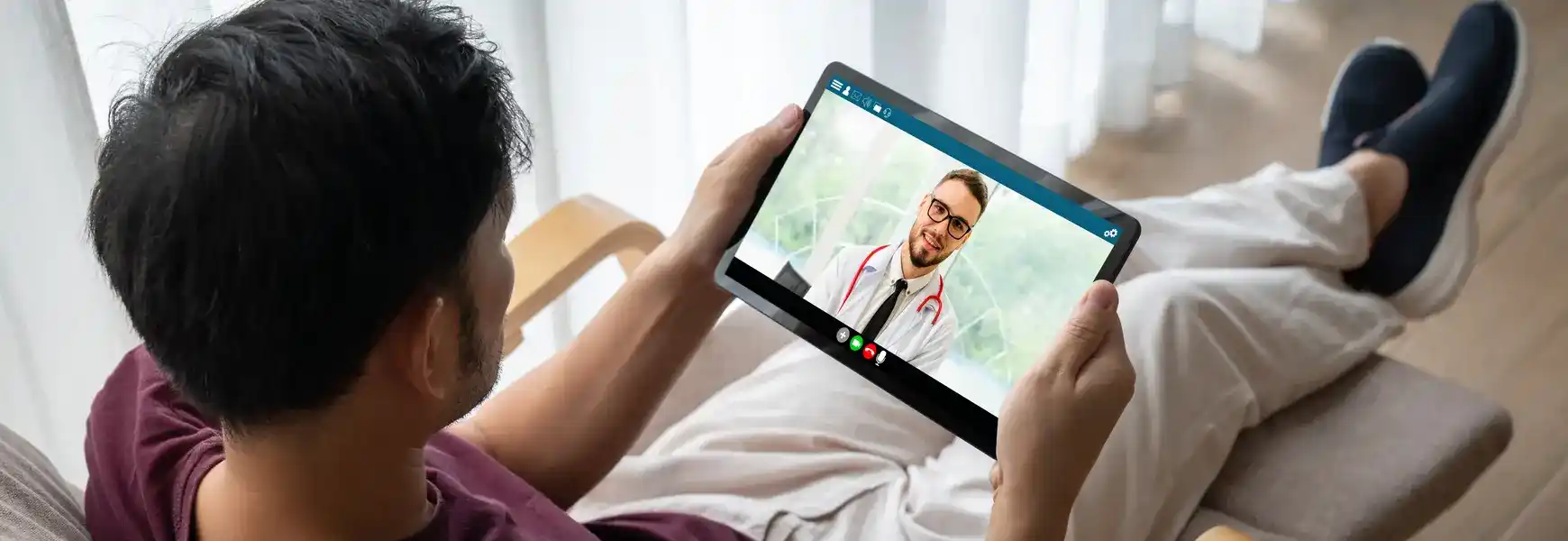
The Rise of Telehealth in School-Based Therapy
August 4, 2026
Across the country, schools are trying to deliver speech, counseling, and psychological services with fewer qualified clinicians than they need. In ASHA's 2024 Schools Survey, most school-based respondents (78.5%) said open positions outnumbered the people available to fill them, and the strain is just as sharp in school psychology, where the national average of one psychologist per 1,071 students runs more than double the recommended 1:500. In rural and underserved communities, where a single specialist may cover several campuses, those numbers get worse. At the same time, student need for these services keeps climbing.
Telehealth has become the practical answer. The share of public schools delivering mental health services through telehealth rose from 17% in 2021-2022 to 22% in 2024-2025, and what began as an emergency pandemic measure has become a permanent part of how districts deliver therapy. For many schools, a virtual provider is how services reach students at all.
This article looks at why telehealth has taken hold in schools, what it includes, how it is reshaping service delivery, the challenges to plan for, and what separates the programs that work from those that struggle.
Why Telehealth Is Gaining Momentum in Schools
Three forces make school-based telehealth necessary for a growing number of districts.
- Provider shortages show no sign of easing. Speech Language Pathologists' (SLP) employment is projected to grow 15% from 2024 to 2034, far faster than average, but the supply of providers willing to work in schools is not keeping pace, and the school psychologist pipeline faces the same gap. When no qualified provider can be placed on-site, the choice is not between in-person and telehealth. It is between telehealth and no service at all.
- Post-pandemic acceptance changed the baseline. Before 2020, school telehealth mostly served homeschooled, medically fragile, or remote students. Then COVID-19 forced a system-wide experiment: only about 8.5% of SLPs had used telepractice with students aged 3 to 21 before the pandemic, yet within months most had shifted to remote delivery. That experience changed what districts, families, and providers considered possible, and the regulatory flexibility, better platforms, and new provider skills did not disappear when schools reopened.
- Student need keeps growing. Nearly one in five public school students used school-based mental health services in 2024-2025, and 58% of schools reported that demand rose from the prior year. The clinicians meant to meet that need are already stretched: ASHA's 2024 Schools Survey put the median SLP caseload at 50 students, well above the 40 that SLPs themselves consider manageable and as high as 78 in some states. When demand climbs faster than a district can hire, telehealth is how the added capacity actually reaches students.
What School-Based Telehealth Is (and Isn’t)
School telehealth spans a range of technologies and service models, and the distinctions matter for districts deciding what to implement. Two questions shape most decisions: how services are delivered, and which services fit the format.
How it's delivered
| Model | What It Is | Role in Most Programs |
|---|---|---|
| Synchronous | Real-time audio and video communication between the provider and student. | The core of most programs, supporting live therapy sessions and direct provider-to-student interaction. |
| Asynchronous | Information shared for later review, such as a recorded speech sample for SLP evaluation or a behavioral rating scale reviewed before a consult. | Supplements synchronous work by providing additional insights and support between sessions. |
The e-helper role. School teletherapy is not a provider and student alone on a screen. Effective programs designate an on-site support person, often called an e-helper or telefacilitator, usually a paraprofessional, teaching assistant, or aide. This person manages logistics, provides the physical prompts and materials a remote provider cannot, and supports engagement, especially for younger students or those with attention challenges. ASHA research identifies a trained e-helper as one of the most important factors in successful delivery.
Which services fit the format
| Service | Telehealth Fit | Notes |
|---|---|---|
| Speech-language therapy | Strong | Strongest evidence base; comparable outcomes to in-person care for many goals. |
| School psychology | Strong | Assessment consultation, counseling, behavioral intervention planning, and IEP participation. |
| Mental health services | Strong | Individual therapy, group sessions, and crisis follow-up delivered successfully via school platforms. |
| Occupational therapy | Partial | Consultation, visual-motor, and sensory processing work translate well; hands-on intervention needs on-site support. |
| Physical therapy | Weak | Gait training, balance work, and manual techniques require an on-site provider. |
| Acute behavioral crisis | Weak | Usually requires an in-person response. |
| Early-elementary or significant motor/sensory needs | Weak | May not engage virtually without significant on-site support. |
Telehealth augments the model; it does not replace clinical judgment about when physical presence is required.
|
For clinicians exploring school roles: |
How Telehealth Is Changing School Therapy
When done well, telehealth changes what districts can offer, where they offer it, and how they manage capacity throughout the year.
- Access where providers cannot go. Telehealth removes geography as a barrier, allowing an SLP in one state to serve a rural district in another, or a psychologist to cover several low-density campuses without unworkable travel overhead.
- Staffing-gap relief without a permanent hire. Teletherapy providers onboard faster than traditional hires and can cover interim periods without a long-term commitment, which matters most for specialty roles that outlast the school term.
- Scheduling flexibility. With no time lost to campus travel, sessions can be scheduled more finely, including shorter, more frequent sessions that research finds effective for some goals, so one provider can serve more students.
- Comparable outcomes when the model is run well. Studies show that telehealth and in-person groups achieve similar gains, with the strongest results associated with e-helper support, platform reliability, and consistent session structure.
|
Explore school-based staffing by specialty: |
Challenges Schools Must Weigh
Telehealth has real limitations, and districts that ignore them will underperform what the model can deliver.
- Technology access is not universal. Rural broadband, home device access, and private in-school space with reliable connectivity all take planning and often capital investment.
- Engagement requires active management. Virtual sessions need different strategies, and provider training in telehealth-specific techniques is the single most salient factor in successful implementation.
- Privacy and compliance require deliberate design. School telehealth sits at the intersection of FERPA and HIPAA, and those requirements belong in the program design, not as afterthoughts.
- Medicaid billing variability creates funding uncertainty. Coverage and payment parity vary widely by state, so map your reimbursement policies before building a budget that depends on Medicaid recovery.
- Clinical judgment determines when telehealth is not enough. It is a delivery model, not a default, and applying it to every gap, regardless of fit, underperforms, letting providers judge when it suits the student.
|
For clinicians considering school-based work: |
Best Practices for Building an Effective Program
A telehealth program lives or dies in the rollout. The districts that succeed treat implementation as a phased effort rather than a single launch, so problems surface while they are still small and cheap to fix.
Phase 1: Start with a pilot. Begin with one or two schools, a defined caseload, and the services that work best virtually, usually speech-language therapy or school psychology. Set a timeframe, a few success measures, and one person accountable for the program. A small start tests your workflows without risking service delivery and gives you the evidence to expand.
Phase 2: Build the foundation first. Put the essentials in place before services begin: parent and guardian consent documented for FERPA and IEP requirements, a platform verified against data privacy standards, a trained e-helper for each student, and a private, connected space in each building. Skipping any of these is where early programs most often fail.
Phase 3: Bring on the right providers. School-based virtual therapy is a distinct skill from in-clinic work, so choose providers vetted specifically for it. A staffing partner handles multi-state licensure and credentialing and matches providers to your needs rather than filling a slot on paper.
Phase 4: Measure from week one. Track IEP progress for telehealth the same way you track in-person work, starting with the first session. Early data show which students are not responding in time to adjust and provide evidence to defend the program to the board and families.
Phase 5: Review and scale. After the pilot, fix what did not work, drop what did not fit, and expand to more schools and services, backed by data for each decision. Scaling on evidence is what makes a program last across school years and leadership changes.
Partner With GHR Education
GHR Education places speech-language pathologists, school psychologists, occupational and physical therapists, and mental health providers in K-12 districts nationwide, including virtual and hybrid roles where geography, shortages, or interim needs make on-site placement impractical.
Our recruiters specialize by discipline and understand the operational and clinical demands of school-based practice. We vet for telehealth experience, manage credentialing and multi-state licensure, and match the delivery model to the need rather than defaulting to one solution.
Whether you are covering an open position, building a sustainable telehealth program, or maintaining IEP service delivery through a staffing gap, GHR Education can help you find qualified providers and put a durable plan in place.
For clinicians exploring teletherapy roles in schools, we can connect you with positions that match your specialty, licensure, and schedule.
Connect with GHR Education to discuss your district's staffing needs.